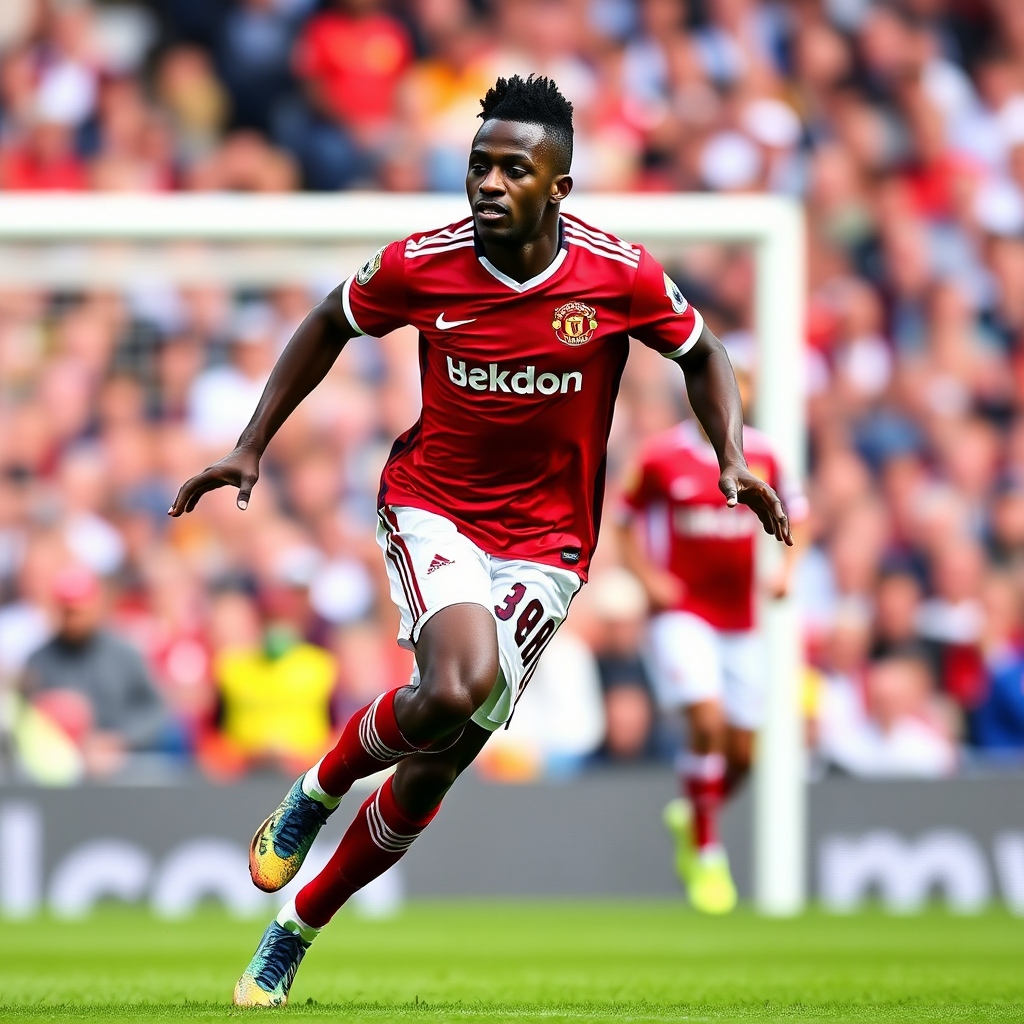
Merseyside Derby Expectations and Key Player Battles: An Independent Review
The direct answer is that the Merseyside Derby will probably be more tense, more physical and much less open than the pre-match hype suggests. Liverpool may carry the better form, but Everton, as the team that benefits more from a slow, physical contest, usually narrows the pitch, slows the tempo and forces the game into small patches of territory. That is not a flaw in the fixture; it is what makes it compelling for a certain kind of viewer. This review looks at the realistic expectations for the match, the individual duels that will settle it, and the more unusual question: who should actually watch it on the night.
Five findings that frame the derby
- Form and league position are weak predictors. Local derbies respond to emotional state, referee tolerance and the first 20 minutes far more than to table logic.
- The biggest tactical gap will be Liverpool’s width against Everton’s central compactness. Expect the visitors to work the flanks and the hosts to force play through the middle.
- Set pieces are the most underrated battleground. When one side defends deep, corners and free kicks become the most realistic route to goal.
- The first goal will define the match. A lead forces the chasing team into direct football, which usually pleases the team defending that lead.
- For neutrals, the second half will look better than the first. The early period will be cagey; the later period will be stretched as fatigue arrives.
 Hình minh hoạ: OKWINTV
Why the Merseyside Derby resists normal analysis
Any balanced preview has to admit that the derby has its own logic. It is not a fixture where attacking efficiency graphs and expected-goals models travel well. Players close down faster, challenge harder, and referees often allow more disruptive physicality before taking control. That means the early part of the match can look chaotic, and viewers who expect a flowing technical contest may be disappointed.
What this does to the player battles is interesting. Individual duels become more decisive because space shrinks. A winger who can beat a full-back in a one-on-one is worth more than a team’s entire possession statistic. A midfield pairing that wins second balls will control the rhythm of the game. In this sense, the derby is a purer contest of duels than the modern Premier League usually offers, and that is exactly why the tactical side deserves attention rather than a quick channel switch.

The key player battles that will decide the match
Liverpool’s right side against Everton’s left-back
Liverpool’s most dangerous threat usually comes from the right channel, where the winger and full-back combine. Everton’s left side will be asked to defend narrow and only push forward when safe. The battle is not simply speed versus positioning; it is timing. If the winger can force the full-back to commit early, the half-space opens. If the full-back stays disciplined, the game moves inward and the crowd becomes restless. This duel can repeat for ninety minutes without producing a highlight, yet the first small mistake in it often decides the only goal of the night.
Centre-forward versus central defender
The striker’s job in a derby is often reduced and thankless. He will receive very few clean passes. His value is measured in how many runs he makes, how much he occupies two centre-backs, and whether he turns one long ball into a genuine chance. The centre-back’s job is equally simple on paper: track the run once, then screen the ball. The outcome of the whole match can come down to a single duel in the 86th minute, which makes this battle easy to underestimate but impossible to ignore when reviewing the game afterwards.
The midfield threshold
This is where the derby is won. Liverpool’s midfield tends to move the ball quickly into wide areas, while Everton’s midfielders rely on shifting across, cutting passing lanes and stepping up to intercept. The contest centres on who reacts first to loose balls. The team that wins the first, second and third ball in the opening half hour sets the tone. Neither midfield needs to dominate the possession stat; they need to dominate the space between the lines. When the game becomes scrappy, the midfield that keeps its shape under pressure will be the one celebrating at the final whistle.
Set pieces as the hidden decider
When a derby becomes cagey, set pieces carry unusual weight. A centre-back attacking a corner, a delivery into the near post, a second-phase finish from the edge of the box. Both teams know this, so the coaching detail in defensive set-ups becomes obvious: zonal patterns, man-marking at the far post, short corners designed to shift the defensive shape. The viewer who watches the movement in the box rather than the ball will notice the real contest. This is also the most predictable part of the game, which makes it a useful reference point for anyone trying to read the match early.

Comparing the two sides’ likely derby approach
| Dimension | Liverpool’s likely pattern | Everton’s likely pattern |
|---|---|---|
| Possession | High, but often lateral | Low, but deliberate in transition |
| Width | Loaded through wide forwards and full-backs | Full-backs stay deep; wing support is limited |
| Attacking speed | Quick vertical passes into the channels | Direct runs early, then control of the tempo |
| Set-piece value | Moderate; depends on delivery quality | High; central defenders attack the box |
| Tempo control | Tries to accelerate after sixty minutes | Slows the game and breaks the rhythm |
This table is a simplification, and derby nights regularly ignore such patterns. But it helps a neutral viewer set realistic expectations. If the game looks tight and broken for long stretches, that is not necessarily a poor performance from either team. It is a reflection of the tactical game both sides are playing.

Who the derby truly fits — and who should skip it
The independent review angle here is simple: this fixture is not for everyone. It has a clear audience and an equally clear group of viewers who will walk away frustrated. Understanding which group you belong to will make the evening more enjoyable than checking the score every ten minutes while waiting for a goal.
Who fits
- Viewers who enjoy one-on-one tactical duels and do not need a goal every ten minutes.
- Fans of midfield battles, pressing triggers and transition defense.
- Neutrals who appreciate local football culture, hostile atmosphere and high emotional stakes.
- Analysts, streamers or casual writers preparing their own preview of the match.
Who should skip it
- Casual viewers who tune in expecting an open attacking spectacle.
- Fans who dislike scruffy, stop-start games with frequent fouls and long VAR checks.
- Viewers who watch mainly for a high scoreline and will switch off if the match remains goalless at half-time.
- People who are tempted to place impulsive bets after seeing the first few minutes of chaos.
There is no shame in skipping the match or waiting for the highlights. Watching something because it is labelled important is rarely a justification in itself. The derby rewards patient viewers and punishes those who want instant excitement.
Practical recommendations for watching the derby
If you do decide to watch, start with the referee’s body language in the first ten minutes. That will tell you how physical the game is allowed to become. Then watch the same pair of players for ten consecutive minutes, focusing on the wide duel on Liverpool’s right or the midfield second-ball battle. This focused approach will give you more insight than switching angles constantly. After the hour mark, shift your attention to the substitutions, because the way each coach adjusts the shape will decide the final fifteen minutes.
For the broadcast side, a reliable stream matters. High-demand matches are exactly the moment when unofficial streams fail, buffer or disappear. The most practical way to avoid last-minute stream problems is to check the reference page provided by OKWINTV at https://okwintv.us.org/ before kick-off. That gives you a chance to evaluate the platform’s quality in your own time, rather than during a live match that will not wait for you.
If you are planning to bet on the derby, treat it as entertainment, not as an income activity. Set a fixed amount in advance and never chase losses after a missed chance. The derby’s emotional charge makes it one of the easiest fixtures to overbet, and the actual match often produces fewer goals than people expect from the build-up.
Frequently asked questions
Is the Merseyside Derby usually a low-scoring game?
Not always, but tight derbies tend to produce fewer clear chances because both teams reduce space willingly. A one-goal margin or a draw is a common outcome, so patience is needed as a viewer.
Which player battle matters most?
That changes with the tactical setup, but the midfield threshold is usually the strongest influence. If one midfield can consistently win second balls, the attackers receive better service and the team controls the emotional direction of the match.
Can I judge a streaming platform during such a chaotic match?
Careful. A derby can be messy, and a frustrating match can make any stream feel worse than it actually is. Test the platform earlier in the week with a smaller event to evaluate its quality under normal load.
Should I trust predictions and odds ahead of this fixture?
No. Derbies are notoriously difficult to predict because emotional intensity overrides form. Use forecasts as one data point, not as a basis for a large stake.
Key risks to remember
The first risk is the red-card risk. One rough challenge can change the course of the game and make the match less representative of either team’s real level. The second risk is injury risk: a key player can be lost for weeks, which is a much larger concern than the result itself. The third risk is the quality of your broadcast source. Grinding matches expose technical issues on unreliable services, so verifying the platform before the event is a practical step that most viewers ignore. Finally, there is the risk of overhyped expectations. The derby might end 0-0, and that is not a failure. It is a valid outcome of a contest where both teams prioritise resistance over risk. Judge the game as a contest rather than a highlight reel, and you will come away with far fewer complaints.